What Is the Right to Disconnect?
Discover what the right to disconnect actually means for remote workers, why companies are adopting it, how it works across time zones, and what it realistically protects.

• The right to disconnect protects employees from being expected to read or respond to work messages outside their regular working hours.
• What started as formal labor law in France back in 2017 has steadily expanded into other countries and, informally, into company policies worldwide.
• It matters even more in remote setups, where the absence of a physical office makes it harder to signal when the workday actually ends.
• It doesn't ban after-hours contact entirely; real-world success relies heavily on management, workplace culture, and actual enforcement, rather than just written rules.
What it is
France pioneered this framework back in 2017, becoming the first country to codify the right into labor law. The legislation required larger companies to negotiate formal agreements with staff regarding after-hours digital communication. Since then, several other nations and regions—including Portugal, Belgium, and Australia—have enacted their own versions, though specific requirements vary depending on the jurisdiction. Where no specific legislation exists, plenty of companies establish an informal right-to-disconnect policy on their own. This usually happens after leaders realize team members feel pressured to answer late-night Slack messages or weekend emails, even when nothing urgent is on the line.
Why it matters
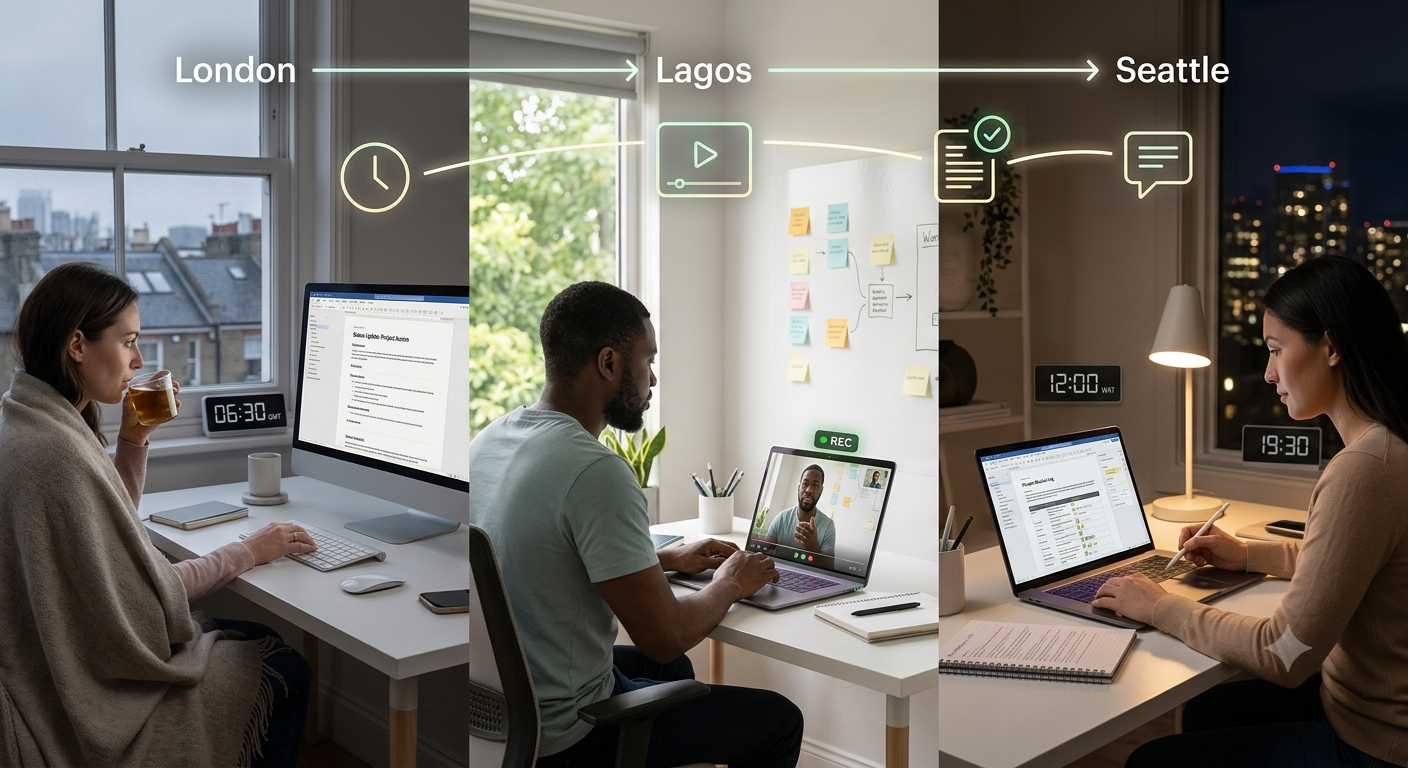
Remote work eliminated many of the natural cues that traditionally signaled the end of a workday—like shutting your laptop, watching coworkers head for the exit, or leaving the building. Without those physical markers, working hours naturally tend to stretch into the evening. That's especially true when phone notifications keep coming through, creating a quiet worry that ignoring them might make you look disengaged. This dynamic surfaces constantly across distributed teams. A quick message sent at a reasonable hour in one time zone might land on a colleague's phone at 11 p.m. Without explicit expectations in place, the person receiving that late notification often feels compelled to reply right away, if only to demonstrate that they are active and reliable.
How it works
The precise implementation varies depending on whether an organization is fulfilling a legal mandate or trying out internal rules, but several common strategies tend to emerge. Common approaches
• National or regional legislation: Statutory rules requiring mid-sized and large companies to negotiate formal disconnection policies directly with their employees.
• Internal company policies: Operational norms, such as configuring non-urgent emails to automatically delay delivery until the next business morning.
• Core overlap windows: Dedicated collaboration hours for distributed teams, establishing that any communication sent outside that window is treated as non-urgent by default.
• Built-in tool settings: Leveraging native application features, like scheduled sending in email clients or automated 'Do Not Disturb' schedules in messaging platforms.
What it does not do
It's worth emphasizing that the right to disconnect is not a blanket prohibition on off-hours communication. Genuine emergencies—such as a critical server outage or a major client emergency—are still handled through agreed-upon urgent contact channels. The policy targets routine, non-urgent messaging, rather than every possible scenario where someone might need to reach you.
Summary
Ultimately, the right to disconnect has grown in response to the way remote and hybrid arrangements erased the physical boundaries that once separated work life from personal time. In some regions, it is now a mandatory legal standard; in others, it is an internal initiative designed to combat burnout directly. Either way, it targets routine off-hours chatter, leaves space for real emergencies, and relies fundamentally on whether the people sending messages actually respect those boundaries in practice. If your distributed team currently operates without a formal framework, a clear starting point is agreeing on core overlap hours and establishing a shared rule: unless a message is explicitly flagged as urgent, anything sent outside that window can—and should—wait.
More in Remote Work
View allFrequently Asked Questions
Is the right to disconnect a law everywhere?
No. While it has become a legal requirement in a growing list of countries and regions—including France, Portugal, Belgium, and Australia—it isn't universal. In places without a specific law, establishing these digital boundaries comes down to individual company policy.
Does the right to disconnect mean I can never be contacted after hours?
No. Most versions of the policy focus specifically on curbing routine, non-urgent messaging, not genuine emergencies. The goal is removing the baseline expectation that you must monitor or answer standard work chats outside working hours, without making you uncontactable during a critical situation.
Newsletter placeholder
Future weekly technology brief
This block reserves a clean, non-intrusive location for a future newsletter without changing article layouts later.
Comments placeholder
A future comments system can be added here without changing the article template.